Project management that does the work.
Procyon is a fast tracker built around how software actually ships. Releases, code freezes, and who is on the hook are first-class concerns, not custom fields. Cloud or self-hosted, your own instance either way.
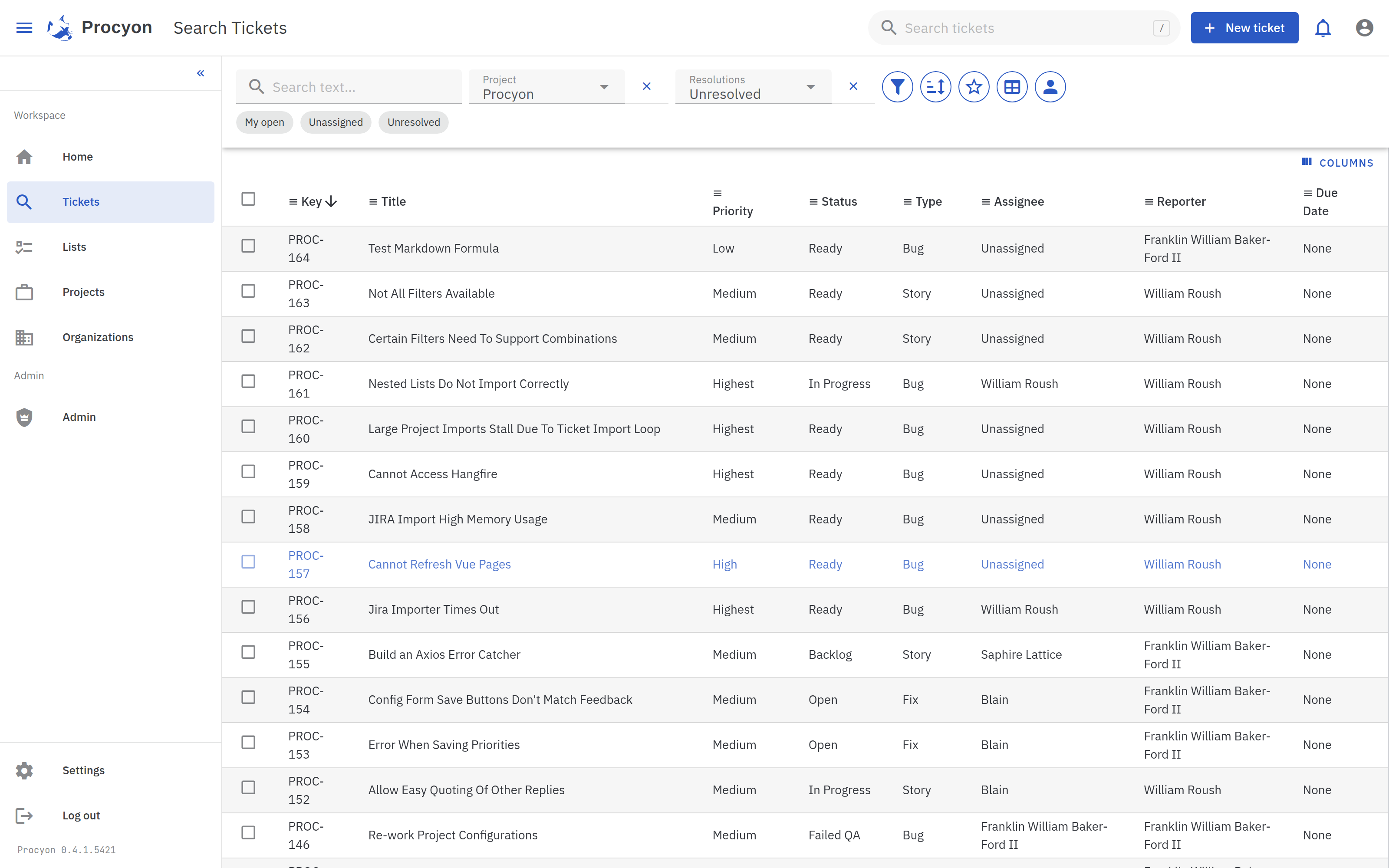
What Procyon does
The whole tracker, without the app store.
Tickets, releases, time tracking, customer support, and automation are the product. There is no app store attached, because a tracker should not nickel-and-dime its way to complete.
A tracker with a memory
Every edit and status change is remembered, and deleting is not destroying: tickets come back when someone was hasty. Your tracker is your business record, and Procyon treats it like one.
Your instance, your choice
Let us run it, or run it yourself on your own hardware. It is the same product either way, and your instance is yours alone, never a tenant in someone else's pool.
Time is part of the tracker
Not an integration, not a second subscription you reconcile at month end. Log work on the ticket it belongs to, with permissions for who can log time and who can correct it.
Fast is a feature
You touch a tracker a hundred times a day, so pages load now, changes stream in live, and the fast path never makes you reach for the mouse.
Proof lives on the ticket
Drop in a screen recording and it plays right on the ticket, big files welcome. The repro stays with the bug instead of scrolling away in a chat channel.
Ready for automation and AI
Your scripts and AI agents work tickets like anyone else on the team: search, file, comment, and resolve. They get the same per-project permissions a person would, with access you can cut off at any time.
Built around the release
Know what is in the release, and what is in the way.
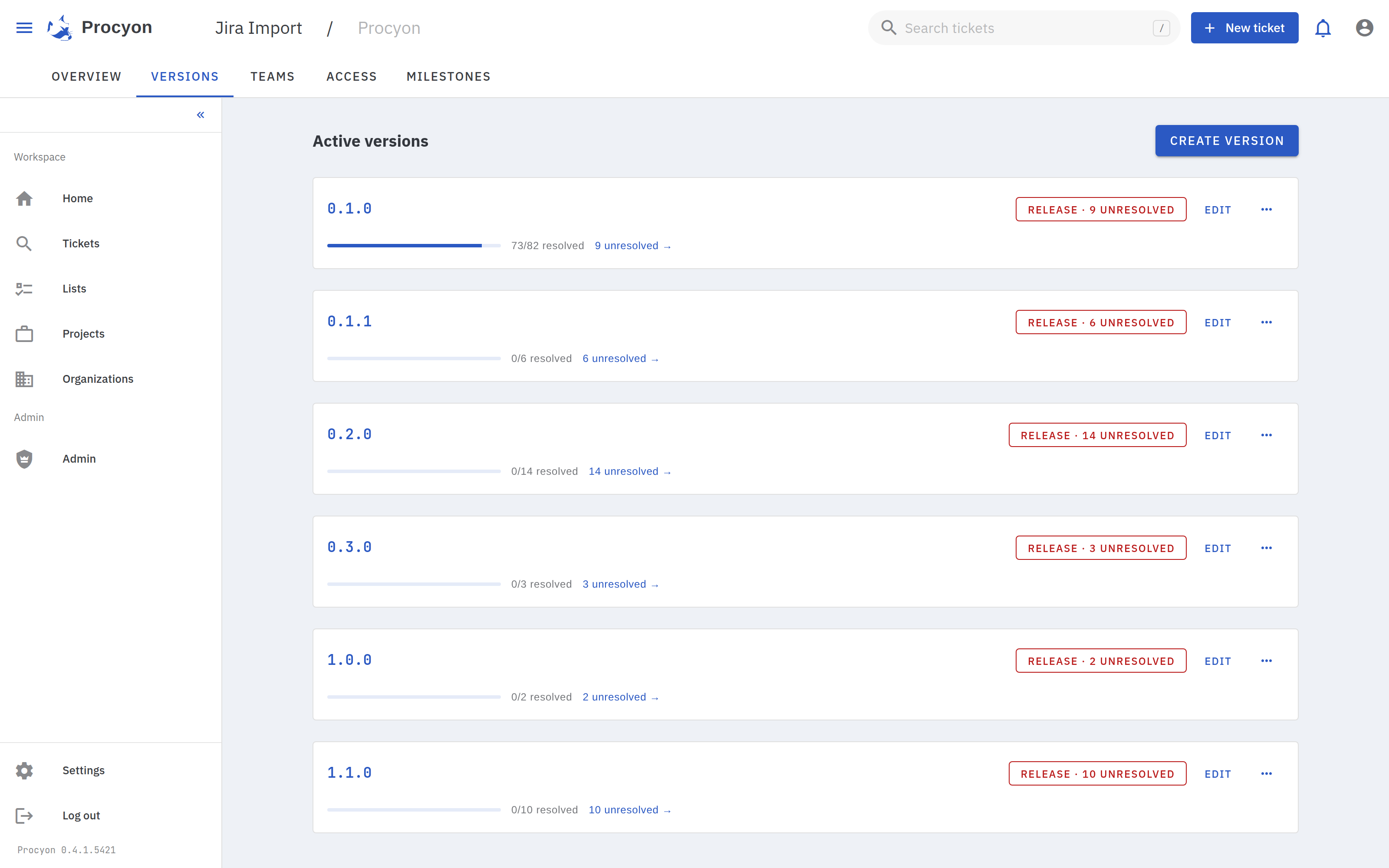
Shipping software is the point, so the release is the unit Procyon thinks in. Versions carry their own progress, their freeze date, and a straight line to the unresolved list. The release radar keeps every active version in view.
- The release radar puts every active version, across every project you care about, on one screen.
- Code freezes live on the version, and a frozen version says so everywhere it appears.
- Missed dates are recorded as slips. Rescheduling ahead of time is planning; after the date, it is history.
One screen per ticket
Everything about a ticket, without the tab safari.
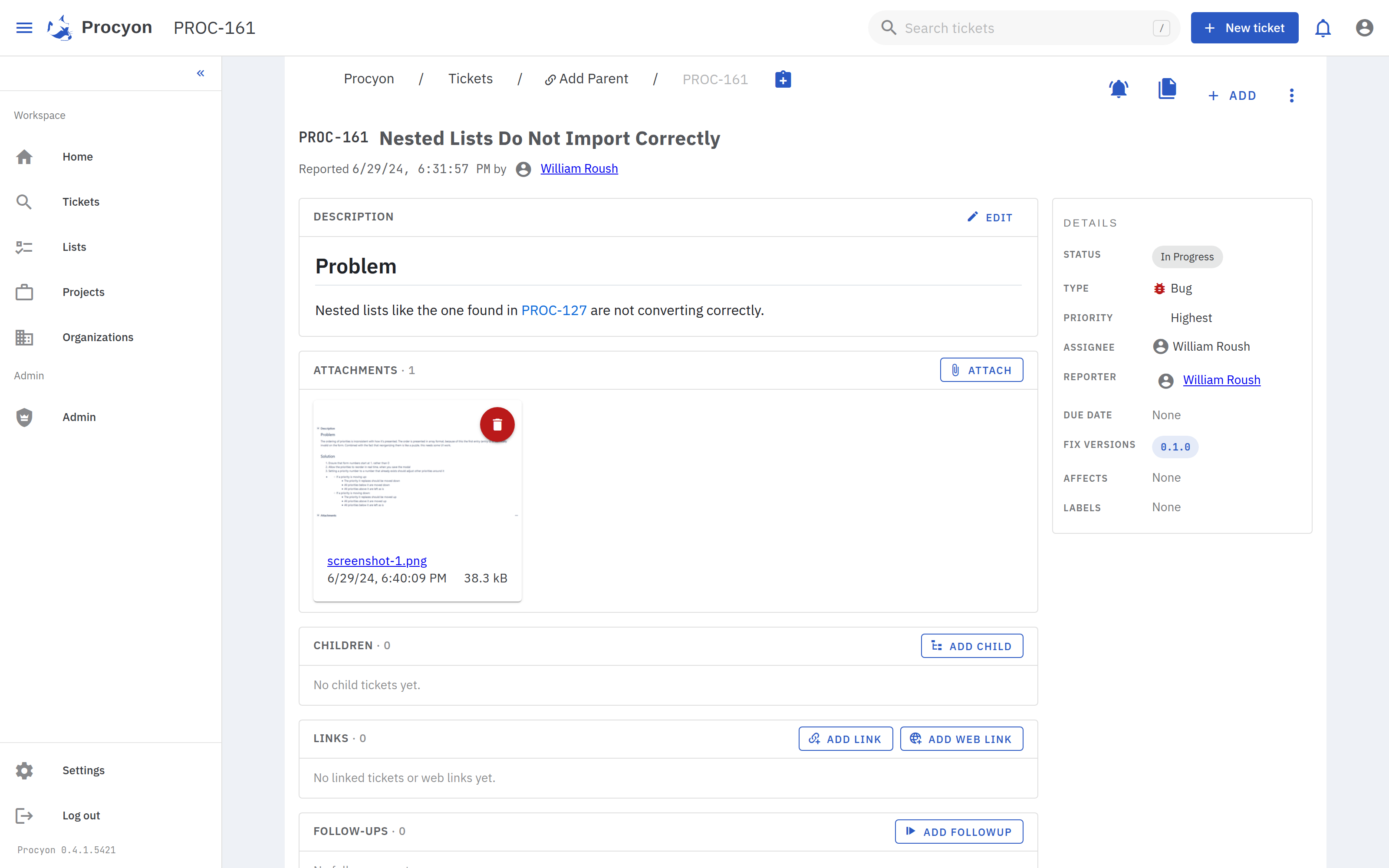
Description, attachments, children, links, follow-ups, and history live on one page. The details rail keeps status, priority, versions, and people in reach while you read.
- Every status names the role responsible, so "who is this waiting on" always has an answer.
- Hover any ticket reference for the whole picture without losing your place.
- Follow-ups put a date on "check back on this" so it actually happens.
Customer support
Your customers get a front door, not a shared inbox.
Every project can put a branded portal in front of the people who report to it, with the work landing in the same tracker your team already lives in. The part you usually buy as a second product is in the box.
Email in, email out
Customers email you and a request appears. They reply to the notification and it threads back onto the request. No portal login required to get help.
SLAs on your calendar
Response and resolution targets that count business hours, not weekends. Queues route new requests round-robin or to whoever is least buried.
Close the loop
Canned responses for the questions you answer weekly, internal comments the customer never sees, and a satisfaction survey when the request is resolved.
Procyon is being built, and written up as it ships.
We run RoushTech on it every day, and it is not ready for yours yet. The blog covers what ships and why. Subscribe to the RSS feed or check back as releases land.